



16 Mar Bioidentical Hormone Therapy vs Traditional HRT
When exploring hormone replacement therapy (HRT), you will likely encounter two main categories: traditional HRT and bioidentical hormone therapy. While both aim to alleviate the symptoms of hormonal imbalance, they use different types of hormones and often have different philosophical approaches.
Understanding the bioidentical hormone therapy vs traditional hrt debate is crucial for making an informed decision about your health. This hormone options comparison will help clarify the key distinctions.
What Is Traditional HRT?
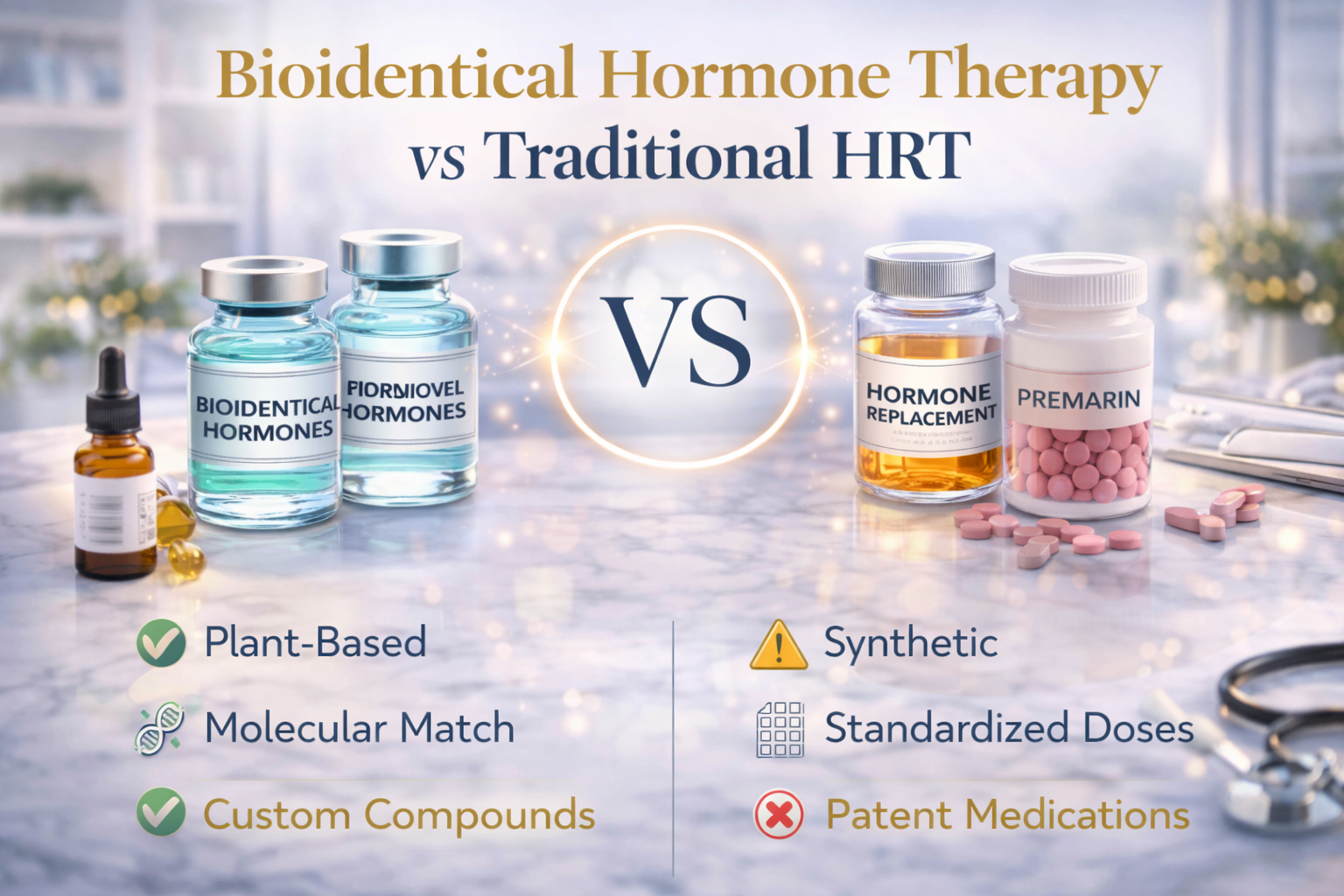
Traditional HRT typically uses hormones that are either synthetic or derived from animal sources. A common example is conjugated equine estrogen, which is derived from the urine of pregnant mares. These hormones can reduce symptoms like hot flashes and night sweats. However, because they are not structurally identical to human hormones, they may be metabolized differently by the body.
What Are Bioidentical Hormones?
Bioidentical hormones are derived from plant sources such as yams or soy and are engineered to be structurally identical to the hormones your body produces naturally. On a molecular level, bioidentical estrogen, progesterone, or testosterone is an exact match for your own hormones.
This structural match allows the body to recognize and utilize them in the same way it would naturally produced hormones, potentially leading to a more seamless treatment experience.
The Core Difference: Bioidentical vs Synthetic Hormones
The central point in the bioidentical hormone therapy vs traditional hrt discussion is molecular structure. Your body’s hormone receptors act like locks, and hormones act like keys. Bioidentical hormones fit precisely into those receptors.
Bioidentical vs synthetic hormones show that synthetic hormones may still relieve symptoms, but the molecular fit is not identical. This difference is why some practitioners believe bioidentical hormones may offer a more natural physiological interaction.
Personalization: A Key Part of the Hormone Options Comparison
Another significant distinction lies in dosing philosophy. Traditional HRT often comes in standard, mass-produced doses. In contrast, bioidentical hormone therapy is typically personalized.
A physician specializing in bioidentical hormones will:
- Conduct comprehensive testing to determine your exact hormone levels.
- Prescribe a dose tailored to your specific needs.
- Send the prescription to a compounding pharmacy for individualized preparation.
This level of customization is a major factor in the bioidentical hormone therapy vs traditional hrt comparison. It ensures your treatment is precise and individualized.
Are Bioidentical Hormones Safer?
This is one of the most debated questions in the hormone options comparison. Advocates of bioidentical therapy argue that because the hormones are structurally identical to those produced by the body, they may provide a more natural interaction. However, large-scale, long-term studies directly comparing bioidentical vs synthetic hormones remain limited.
Experts generally agree that safety depends less on the hormone source and more on:
- The expertise of the prescribing physician.
- The personalization of the dosage.
- The appropriateness of the delivery method.
- Consistent and careful monitoring.
When supervised properly, both types of therapy can be administered safely.
Making the Right Choice for You
The decision in the bioidentical hormone therapy vs traditional hrt discussion is personal and should be made in consultation with an experienced physician.
Consider:
- Your Philosophy: Do you prefer hormones identical to what your body produces?
- Your Desire for Personalization: Is a custom-tailored dose important to you?
- Your Doctor’s Expertise: Does your provider specialize in the approach you are considering?
For many individuals, the combination of structural identity and personalized dosing makes bioidentical hormones an appealing option.
Dr. Bourget specializes in bioidentical hormone therapy and believes a personalized approach offers a strong foundation for long-term wellness.
Book a consultation to receive a detailed hormone options comparison and determine which therapy aligns best with your health goals.
Frequently Asked Questions About Bioidentical vs Synthetic Hormones
Are bioidentical hormones approved by the FDA?
The individual bioidentical hormones such as estradiol, progesterone, and testosterone are FDA-approved. However, custom-compounded doses prepared by a compounding pharmacy are not individually FDA-approved because they are uniquely prepared for each patient.
Is there a significant cost difference in the bioidentical hormone therapy vs traditional hrt comparison?
Costs vary. Some mass-produced traditional HRT products may be covered by insurance. Custom-compounded bioidentical hormones are often not covered but many patients find the personalized care valuable.
How do I know which hormones I need?
Comprehensive blood testing is required to determine your hormonal levels and needs. This is essential regardless of whether you choose bioidentical or traditional HRT.
Can I switch from traditional HRT to bioidentical hormone therapy?
Yes. Many patients transition successfully under physician supervision. Your doctor can guide you through the process safely.
What is the main takeaway from the bioidentical vs synthetic hormones debate?
The most important factor is personalized care from an experienced physician. The expertise of your provider and customization of your plan are the most critical elements for safe and effective therapy.