



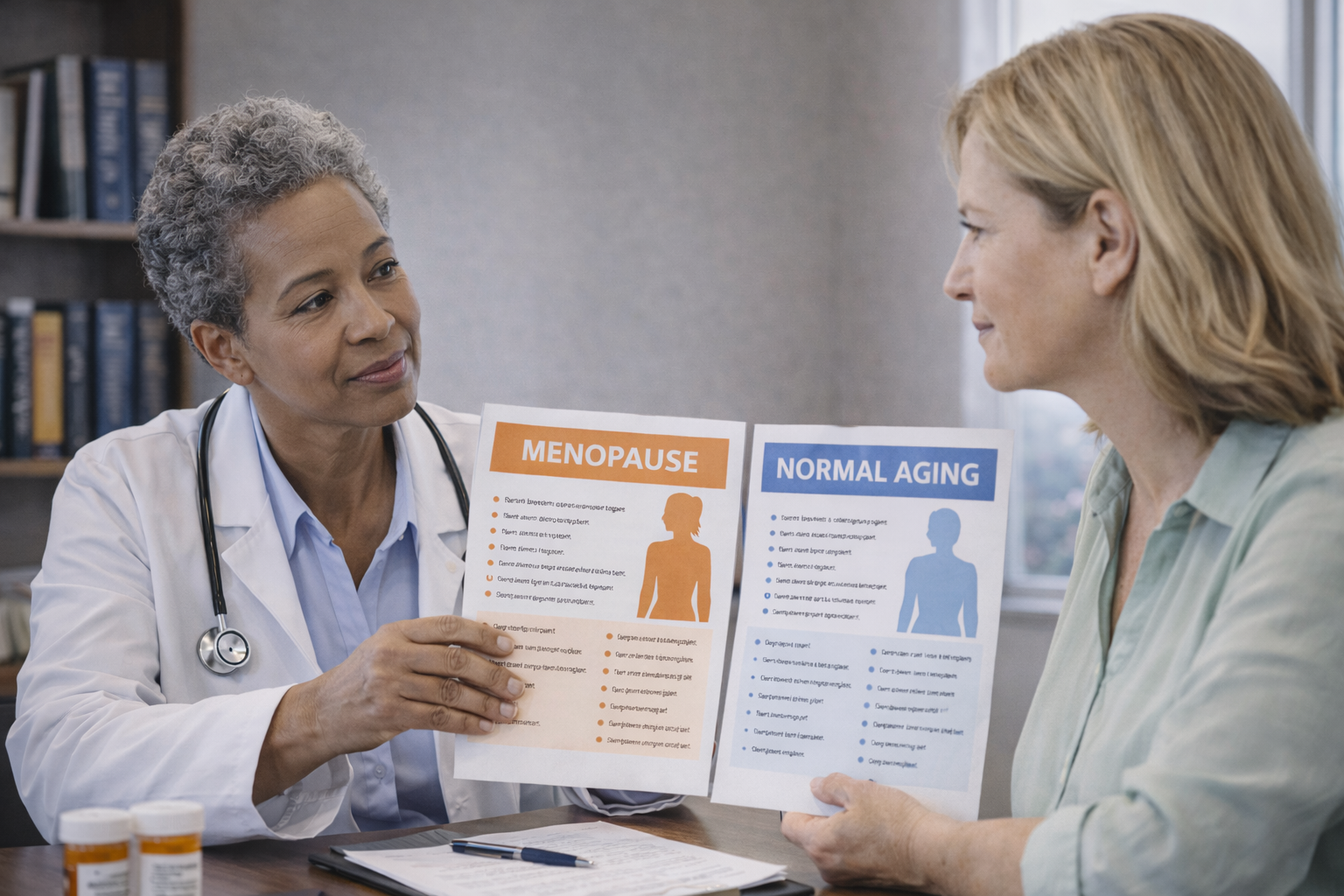
30 Jan Menopause vs Normal Aging: How to Tell the Difference
Many women in their 40s and 50s navigate a confusing landscape of physical and emotional changes. Many people want to know whether fatigue, mood swings, or sleep disturbances are part of a normal age progression or possibly something else.
Identifying and distinguishing between menopause vs aging symptoms can help point to differences in cause and potential treatments and ultimately empower individuals to be more prepared for discussions they may have with their physician.
Understanding Normal Hormonal Aging in Women
Normal aging occurs as you age. It can be seen with a slow decrease of your metabolic rate.
With age, your skin’s elasticity and hair texture can also show slight decreases, all of which are part of the normal hormonal aging women can expect. They develop over time, often many years.
Your energy level can drop just a little bit, but it will rarely fall off the cliff (plummet) right away. What is most important about this is that the changes are slow and do not normally cause significant disruption to your daily routine.
The Hallmarks of Menopause Symptoms
Menopause, on the other hand, involves a more dramatic hormonal shift. The decline is not gradual and therefore not smooth; it will be an interval of extreme variations in estrogen and progesterone levels, resulting in a new lower baseline. This turbulence creates the classic menopause signs that are often more intense and abrupt than those of normal aging.
Common Menopause symptoms:
Hot flashes and night sweats: Not just being slightly warm. Hot flashes and night sweats are violent and extremely short bursts of heat that can cause you to perspire profusely and interrupt your sleep greatly.
Mood swings: Hormonal changes may result in irritability, anxiety, or a sense of depression, which may appear at random and be more severe than would normally be expected as a result of the premenstrual syndrome.
Sleep disruption: Beyond night sweats, many women in menopause experience insomnia or find their sleep patterns completely altered, leading to persistent fatigue.
Key Differences: Menopause vs Aging Symptoms
The most significant factor in differentiating menopause vs aging symptoms is the intensity and speed of their onset. Normal aging involves slow, subtle changes over decades. Menopause symptoms can feel like they appear almost overnight.
The other critical distinction here is how these symptoms cluster together. Normal aging may result in some isolated features such as wrinkles or fine lines. In contrast, menopause can present with many different symptoms at the same time. For instance, it is very common for women going through menopause to be experiencing hot flashes, sleep disturbances and cognitive fogginess (brain fog) all at the same time.
The combination of these symptoms strongly indicates you are not simply experiencing the effects of aging but rather, the effects of menopause.
Perimenopause Symptoms: The Confusing Transition
The period leading up to menopause, known as perimenopause, is often where the most confusion between menopause vs aging symptoms arises. This phase can last for several years, and it’s defined by unpredictable hormonal fluctuations. It’s during this time that many women start noticing significant changes.
One of the most common perimenopause symptoms is an irregular menstrual cycle. Your periods might become longer, shorter, heavier, or lighter. You might skip a month, only to have two cycles close together. This irregularity, when combined with other menopause signs like hot flashes, mood changes, and brain fog, is a strong signal that you are in the perimenopausal transition, a distinct phase of hormonal aging women experience.
When to Seek a Professional Evaluation for Menopause vs Aging Symptoms
If you are experiencing symptoms that significantly impact your quality of life, it is time to seek a professional evaluation. You don’t have to simply endure symptoms that disrupt your sleep, affect your work, or strain your relationships. A physician, like an HRT doctor, can help you understand the root cause.
Through a comprehensive consultation and targeted hormone testing, a doctor can measure your estrogen and progesterone levels. This data, combined with your reported symptoms, provides a clear picture. A professional evaluation is the most reliable way to distinguish between menopause vs aging symptoms and rule out other potential health issues, allowing you to find the right menopause care for your situation.
Your Next Steps
Recognizing the difference between the symptoms of menopause and normal aging is the first step toward taking control of your health. While aging is a natural process, the disruptive symptoms of menopause are not something you have to suffer through without support. Professional guidance can provide clarity and effective solutions.
Dr. Bourget specializes in helping women navigate the complexities of hormonal aging in women, creating personalized care plans that address their unique needs. A consultation can help you understand what you’re experiencing and what options are available.
Book a consultation with Dr. Bourget today to discuss your symptoms and explore a path toward feeling like yourself again.
Frequently Asked Questions About Menopause vs Aging Symptoms
How can I definitively tell the difference between menopause vs aging symptoms?
While symptom patterns provide clues, the most definitive way is through a professional evaluation with a doctor. Hormone testing combined with a review of your symptoms can confirm if you are in menopause or perimenopause.
Do all women experience the same menopause vs aging symptoms?
No, the experience is highly individual. Some women have mild symptoms, while others find them debilitating. The specific cluster of symptoms, from hot flashes to mood swings, varies greatly from person to person.
Can I experience perimenopause symptoms even if my period is still regular?
Yes, it’s possible. Some women begin to experience other perimenopause symptoms like mood changes, sleep disruption, or brain fog before their menstrual cycle becomes noticeably irregular. Hormone levels can fluctuate even with a seemingly regular cycle.
Are there lifestyle changes that help with menopause symptoms?
Absolutely. Regular exercise, a balanced diet, stress management techniques, and prioritizing sleep can all help mitigate the severity of menopause signs. For many women, these are a crucial part of their overall management plan.
Is it possible for menopause vs aging symptoms to overlap?
Yes, and this is why it can be so confusing. You will still experience the gradual changes of normal aging during menopause. However, the key is to look for the additional, more intense, and clustered symptoms that are characteristic of the menopausal transition.